Buying your first snowboard gear – what to get, and when to get it
Rental gear has come a long way in the past couple of decades. With a rising tide of quality,
and even the option to borrow high-end models, it’s not just for newbies anymore. If you really want to stick two fingers up to the budget airlines and their exorbitant baggage fees, or indulge your inner John Cooper Clarke until the wheels (or edges, rather) come off, it won’t mean being saddled with a decaying old plank that brings new meaning to the phrase “better in the 90s”.
That being said, for most folk there comes a time to invest in their own kit. If you find the prospect of shelling out for a complete setup daunting – for your bank balance, if nothing else – then don’t worry; it’s actually preferable to adopt a ‘phased transition’ approach, keeping one foot in the rental market as you tool up. That’ll allow you to pick the right stuff at the right time, in line with the type of rider you are (or want to become).
So here, in ideal buying order, is our guide to moving from rentals to the world of ownership.
Outerwear
Hiring jackets and pants is possible, but it’s not the norm, making this the logical place to start.. Besides, on any given trip you’ll need something to keep the cold and snow at bay even when you’re not on the slopes.
Go for a shell jacket – or at least something with minimal padding – rather than a bulky, fully- insulated number. It takes time to gauge how hot you’ll run on the mountain (everyone is different in this regard), so a shell lets you layer up accordingly. Plus, in the early days of your snowboarding, it’s often not the riding that’ll leave you cooking but all the other stuff: hopping across tricky sections of trail; hiking small features in the park to get your eye in; all
the stopping and starting as you navigate your way around unfamiliar resorts… That extra energy use really adds up, and that’s sweat’s got to go somewhere.
Specs are key as well. At the bare minimum, find something with a 10,000ml rating for waterproofing, and 10,000g for breathability. Aim for more if you can; a high-spec jacket will not only keep you drier, but the waterproofing will last longer as well, so be sure to sniff around for the best option to fit your budget. The Beyond Medals Nostalgia jacket, for example, boasts 15K/15K at a lovely price.
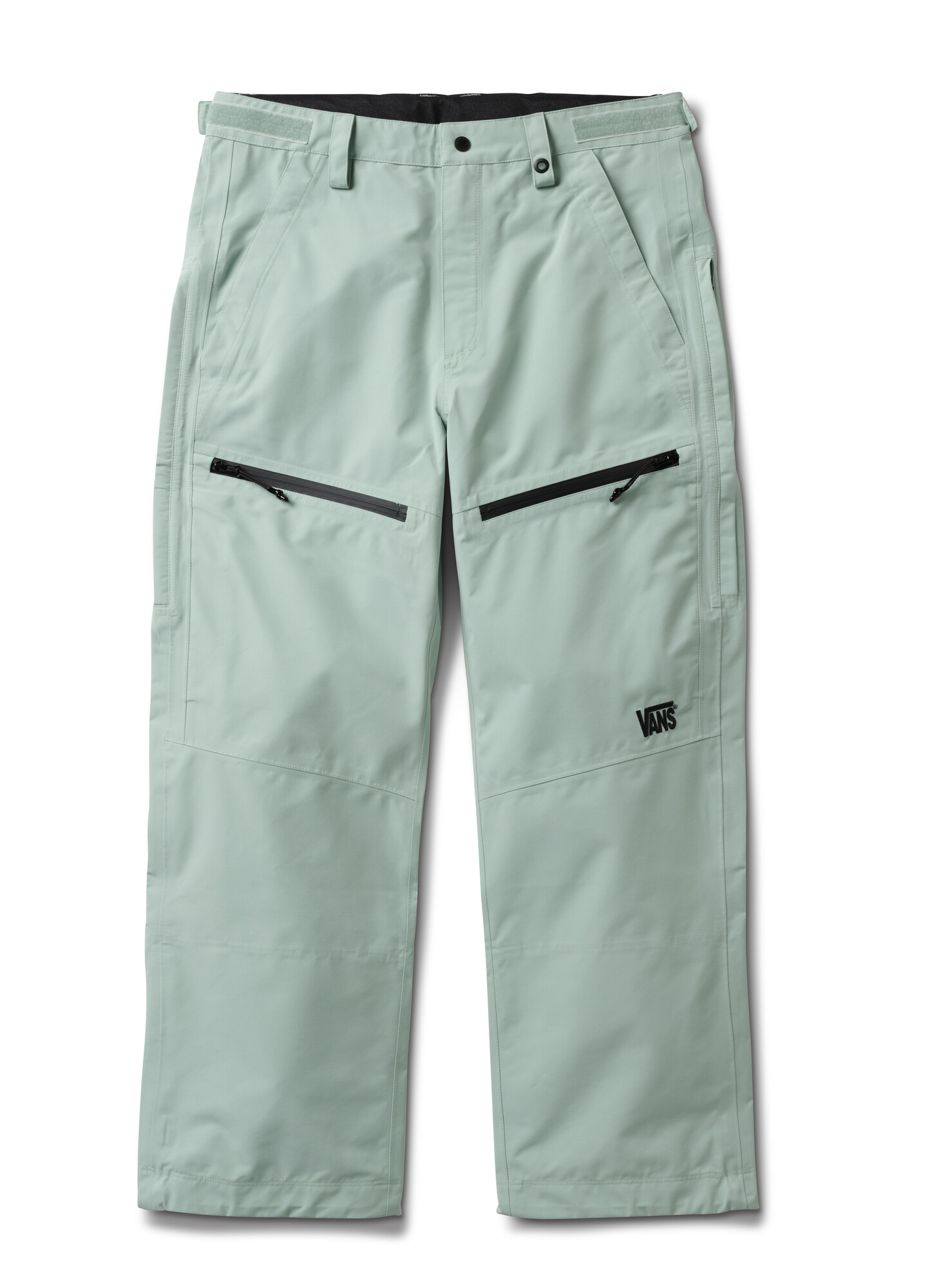
Pants have less to offer away from the hill, but resist the urge to skimp in this department. The closer you are to the start of your snowboarding journey, the more time you’ll be spending on your knees and bum. Look for something with extra reinforcement in either or both of those sections, such as the Vans MTE Hi-Country 3L Pants.
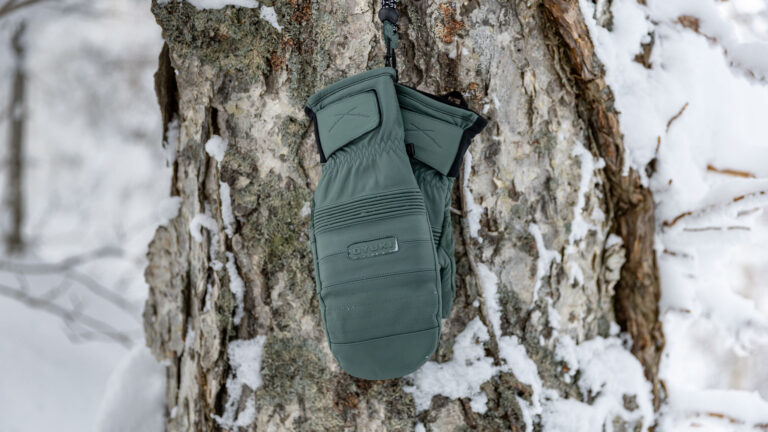
Conditions are everything here; unless you’re only ever going to be riding in the spring, fully insulated gloves are a must. As a rule, mitts are toastier than gloves, but even amongst those you’ll find a huge range of insulation weight and shell materials.
For your first pair, err on the side of warmth and get something that you know will keep your fingers toasty – the alternative is a nightmare. Besides, you can always take ‘em off to cool down; some models have wrist straps that let you dangle your mitts worry-free while on the chairlift, and others boast zips that offer temporary freedom for your fingers. A great all-rounder option is the Burton Gore-Tex Mitten, which has a liner that can be removed in warmer weather (or used on its own in a proper slush-fest!)
We’ve arrived at what’ll feel like your first legit bit of shred gear. Unlike the other stuff, goggles are really only for when you’re actually snowboarding – and as such, getting your first pair can trigger a real spike in the stoke-ometer.
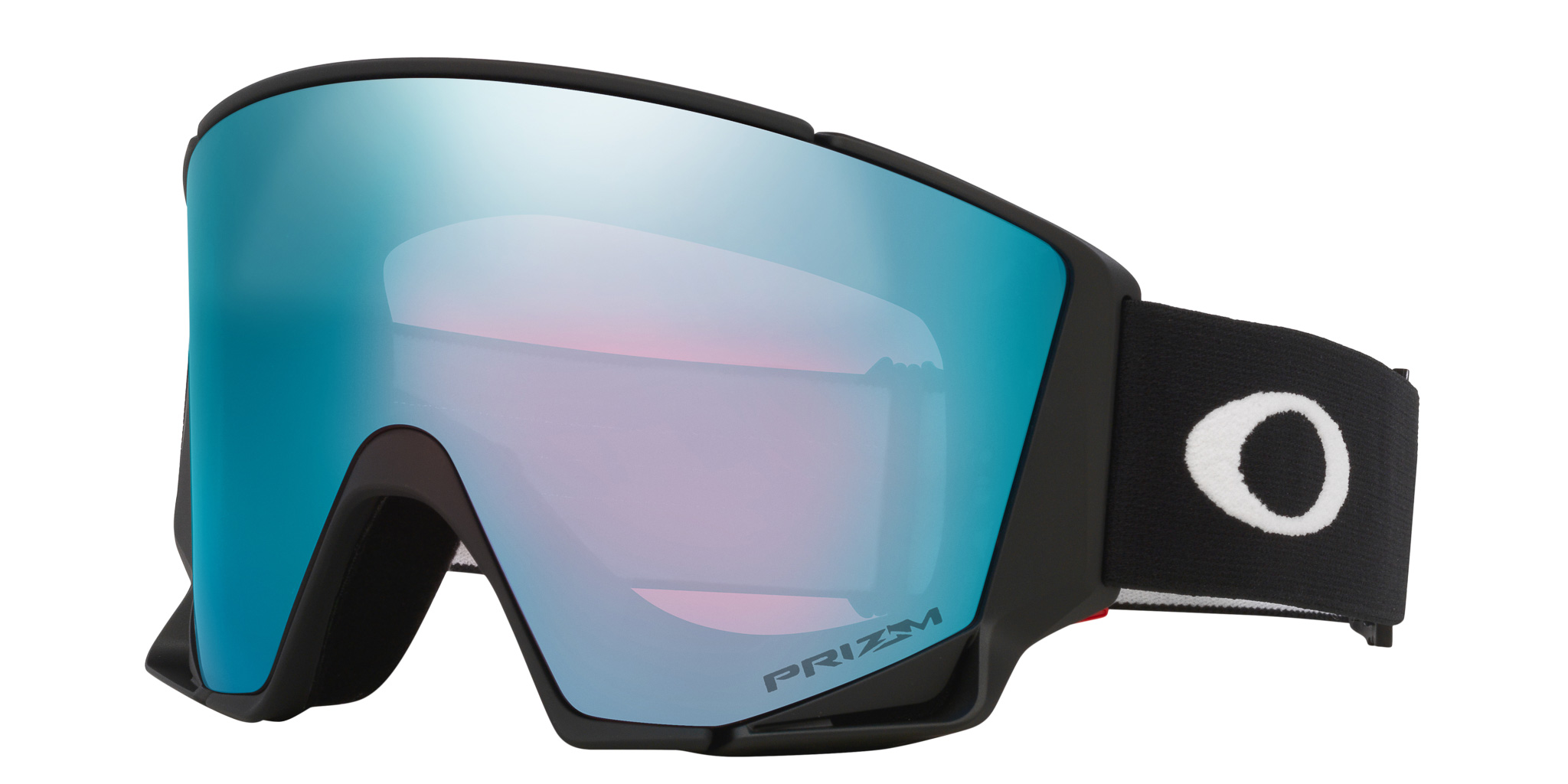
These days prices are getting eye-wateringly high, with some changing hands for roughly the same price as a pair of boots or bindings. Park those for now, and instead look for something like the Dragon DX3 goggles. The lenses are top-notch, and the chunky frame requires less of a delicate touch than some of the more space-age types. Changing the lens gets easier with practice, but for starters we’d recommend picking a mid-spectrum variety and leaving it be. You might not get optimum visuals in flat light nor in bluebird days, but you’ll be prepared for any change in the weather.
If you’ve got money burning a hole in your pocket, higher-end models like the Oakley Flow Scape will certainly improve your day on the hill. Given that they don’t really wear out (provided you look after them), nor go out of style, you can consider them a long-term investment.
Unlike most of the other products on this list, there’s not really an ‘entry-level’ helmet that we could recommend. Granted, when starting out you’re much more likely to experience lighter and more frequent bumps to the head (thank you, edge catches) than anything really traumatic – so something like the K2 Stash would fit the bill.
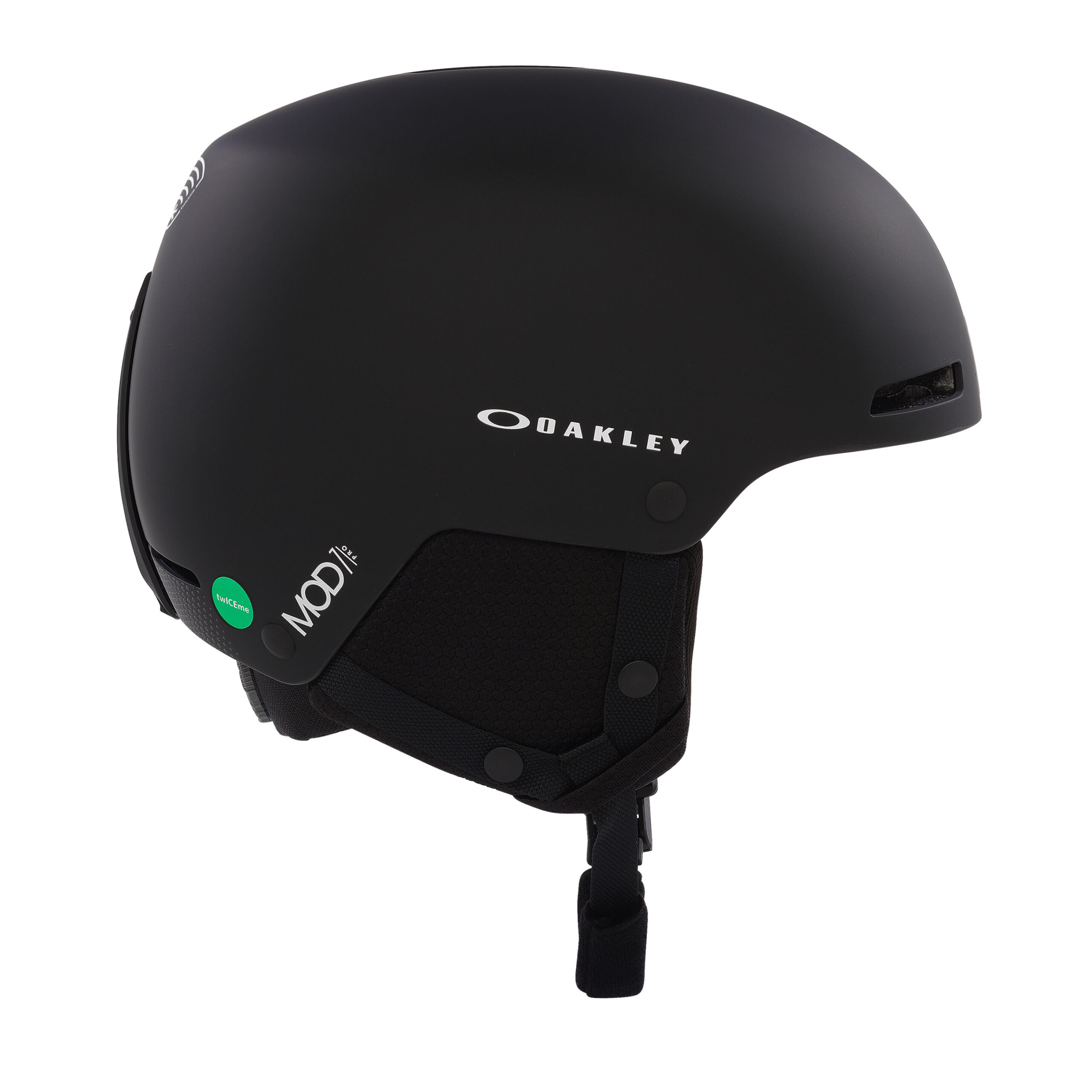
However, not everything in the mountain is in your control, so shelling out for higher-tech protection would still be a wise choice. Look for something with the MIPS system, such as the Spy+ Stargazer and the Oakley Mod 1 Pro, or the ‘crumple zone’ design of the Anon Oslo Wavecel. They cost a lot more, but will pay for themselves if ever called upon. To make your money go further, look for a model that’s also certified for bike use.
Getting the right fit is really important, so get to a shop to find one that’s comfortable and won’t rattle around. If you’ve already bought goggles, ensure they fit neatly without the dreaded ‘gaper gap’. Leaving any exposed forehead between goggle frame and helmet brim remains the ‘wearing-socks-with-sandles’ of the snowboard world – plus you might also pick up an unsightly strip of sun/wind burn. The easiest way to do this is to buy both from the same brand (Anon, Smith, Giro, Oakely among others) but it’s not essential.
Save the Bluetooth-compatability for now. Soaking up all that ambient noise helps you anticipate edge catches, sense your fellow riders, and generally stay safer whilst improving quicker.
Boots
We’ll say it over and over until we’re blue in the face – the first proper bit of snowboard hardware you need to buy is boots! It’s a truth universally acknowledged that if your feet aren’t happy, then neither are you – so make sure you get this right.
By all means read reviews and get recommendations from more experienced riders, but if they’re not right for your feet then they’ll be worse than useless. Get to a shop and try some on – properly. Lace ‘em up, flex ‘em down, walk around, and get as good a sense as you can of how your feet will cope in them for several hours a day. There’ll always be some uncertainty involved, but there’s a lot you can do to minimise it.
As a rule of thumb, the most expensive boots tend to be stiff as hell, so you can avoid all of those and look further down the price points. Something a little softer will give you much more control of your edge angle and pressure distribution at slow and medium speeds. They’re also ideal for getting to grips with ollies, butters and other fundamental elements of freestyle as your confidence grows. The Northwave Decade, for example, offers a beginner-friendly flex, and enough features to keep up with you as you improve.
Most speed lacing systems, including quick-laces and Boa dials, will help you achieve the best levels of tightness. The only exception is the classic fat lace, which takes a bit more practice to get dialled in.
First board
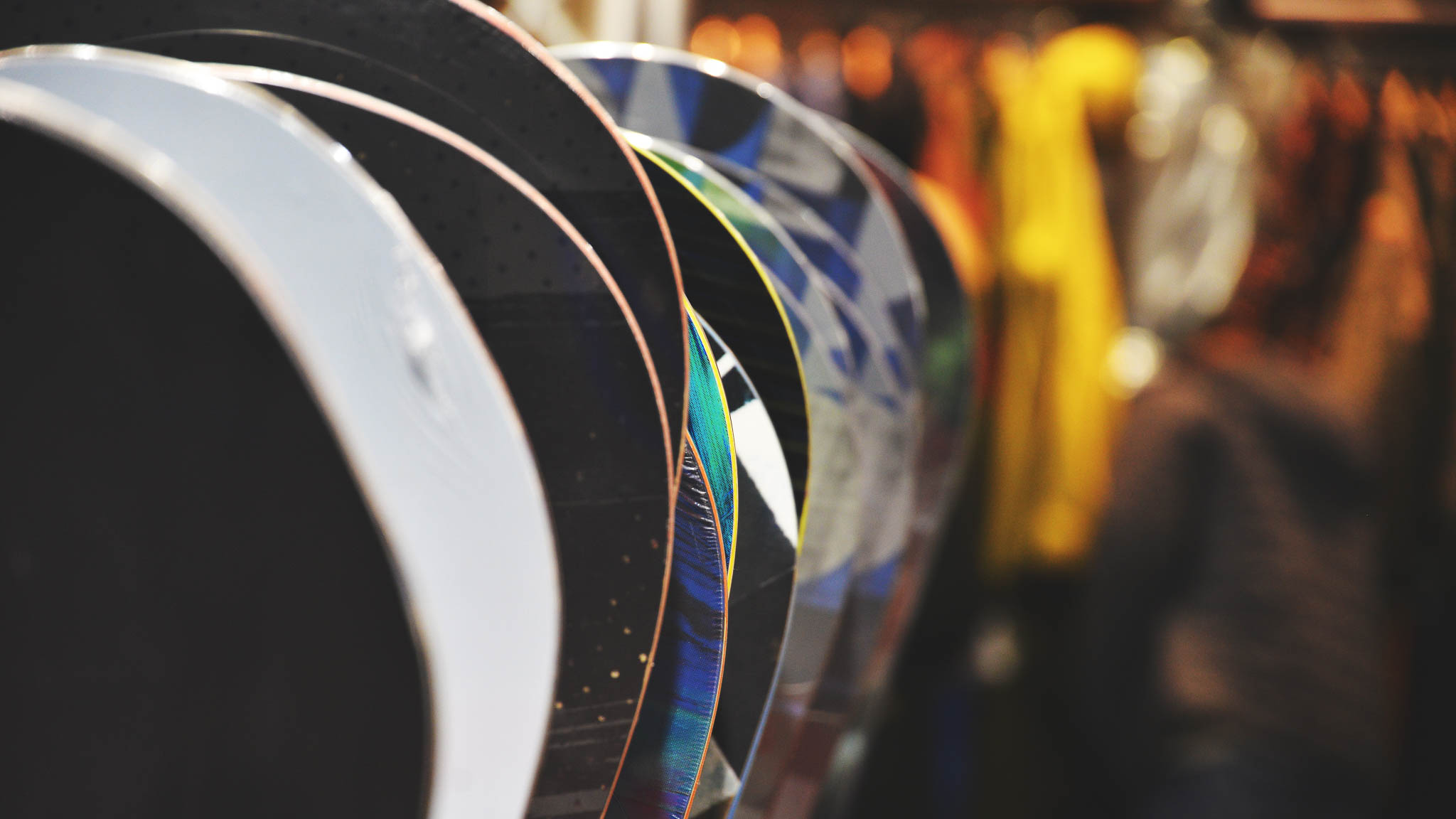
Perhaps you didn’t expect The Big One to be so far down our list. Yes, it makes a huge difference; and yes, the day you buy your first one will live far longer in the memory than when you got your first decent pair of gloves… but given how easy they are to rent these days, we’d recommend holding off as long as you can. That’ll give you the chance to try out different shapes, lengths and styles, reducing the risk of that first purchase taking you down the wrong path.
Shape (and to a lesser extent, size) will be largely dependent on the type of rider you think you are, or want to be. If it’s too early to narrow that down, an all-mountain snowboard is the way to go.
Flex is the next thing to consider. This can be hard to work out sometimes, as ratings (when they even exist) are set by the brand. Very few go down below 5, so in most cases you can assume that’s the bendier end of the scale. Save the 8 and above for when you’ve not only got to grips with the basics of snowboarding, but also want to pursue either freeriding or high-end freestyle, such as halfpipe and the XL kicker line.
The rating usually refers solely to longitudinal (that’s end to end) stiffness – but what’s just as important is the torsional flex (that’s from edge to edge). Shun the triax and carbon-enhanced fibreglass in favour of softer biax glass, which makes it easier to twist the board’s waist and engage your edge.
Something that uses just one type of wood – or two, usually just as a weight-saving measure – is fine. Impact-absorbing plates, carbon stringers, bamboo channels and the like are nice-to-haves at this point, rather than essential. We’d also recommend an extruded base, which isn’t as quick but can take more of a beating and require less upkeep.
The good news is that ‘back to basics’ doesn’t mean low-quality. Amplid, for example, has its Purists range, which applies a few neat features to a solid foundation described above. Check out the Amplid Soul Mate for the most all-rounder-friendly model in the range.
It seems a shame to put anything in the ‘and finally’ slot, but here we are. Bindings are of course still important, but they don’t need to be quite as matched to your physicality as your board does.
You can also opt for something quite sparse at first, from the lower price points, such as the Nitro Talent. Shock-absorbing footbeds, for example, are all well and good, but won’t really come into their own until you’re zooming over cruddy snow at high speeds. Weight-saving features are also something you won’t really appreciate til your level has crept up a bit. If you’ve got more cash to play with, consider a quick-entry option such as the Nidecker LT Supermatic , which will cut out a lot of sitting-down time once you’ve got the hang of them.
Avoid anything too stiff, and you’ll essentially be on the right track. Whatever you go for, take the time to run through all the adjustability options, ideally with someone who knows their stuff. Getting the straps and highbacks to align perfectly with your boots will make more of a difference than you’d think.
And beyond…
Congratulations, you’re now kitted out from top to toe, and those rental shop queues will soon be a distant memory. From this point on it just becomes a matter of swapping things out as needed – and the more you develop as a rider, the better an idea you’ll have of what’s needed for your perfect setup. The options are endless… but checking them all out is part of the fun.
Then there is of course the world of backcountry gear to look forward to, as well as the day your snowboard becomes just one model in a ‘quiver’… but that’s another story.
We use cookies on our website to give you the most relevant experience by remembering your preferences and repeat visits. By clicking “Accept All”, you consent to the use of ALL the cookies. However, you may visit "Cookie Settings" to provide a controlled consent.
This website uses cookies to improve your experience while you navigate through the website. Out of these, the cookies that are categorized as necessary are stored on your browser as they are essential for the working of basic functionalities of the website. We also use third-party cookies that help us analyze and understand how you use this website. These cookies will be stored in your browser only with your consent. You also have the option to opt-out of these cookies. But opting out of some of these cookies may affect your browsing experience.
Necessary cookies are absolutely essential for the website to function properly. These cookies ensure basic functionalities and security features of the website, anonymously.
Cookie
Duration
Description
cookielawinfo-checkbox-analytics
11 months
This cookie is set by GDPR Cookie Consent plugin. The cookie is used to store the user consent for the cookies in the category "Analytics".
cookielawinfo-checkbox-functional
11 months
The cookie is set by GDPR cookie consent to record the user consent for the cookies in the category "Functional".
cookielawinfo-checkbox-necessary
11 months
This cookie is set by GDPR Cookie Consent plugin. The cookies is used to store the user consent for the cookies in the category "Necessary".
cookielawinfo-checkbox-others
11 months
This cookie is set by GDPR Cookie Consent plugin. The cookie is used to store the user consent for the cookies in the category "Other.
cookielawinfo-checkbox-performance
11 months
This cookie is set by GDPR Cookie Consent plugin. The cookie is used to store the user consent for the cookies in the category "Performance".
viewed_cookie_policy
11 months
The cookie is set by the GDPR Cookie Consent plugin and is used to store whether or not user has consented to the use of cookies. It does not store any personal data.
Functional cookies help to perform certain functionalities like sharing the content of the website on social media platforms, collect feedbacks, and other third-party features.
Performance cookies are used to understand and analyze the key performance indexes of the website which helps in delivering a better user experience for the visitors.
Analytical cookies are used to understand how visitors interact with the website. These cookies help provide information on metrics the number of visitors, bounce rate, traffic source, etc.
Advertisement cookies are used to provide visitors with relevant ads and marketing campaigns. These cookies track visitors across websites and collect information to provide customized ads.