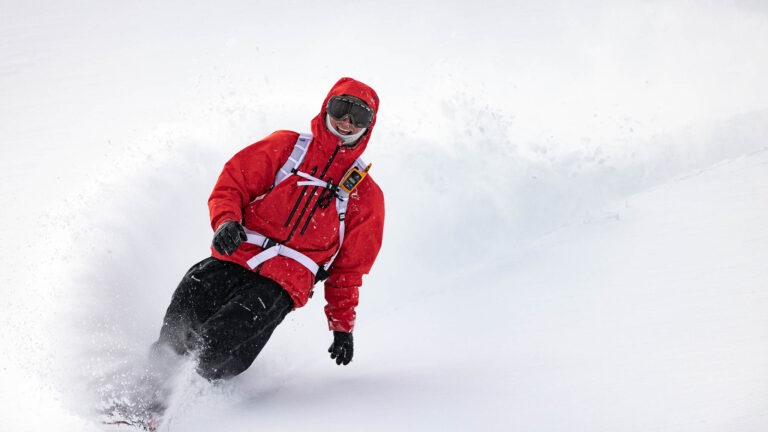
Making R&D RAD | How Amplid Snowboards Carved Out Their Niche
Amplid have always done things their own way. As the Bavarian brand celebrates its 21st birthday, we sit down with founder Peter Bauer to talk about what makes their boards different.
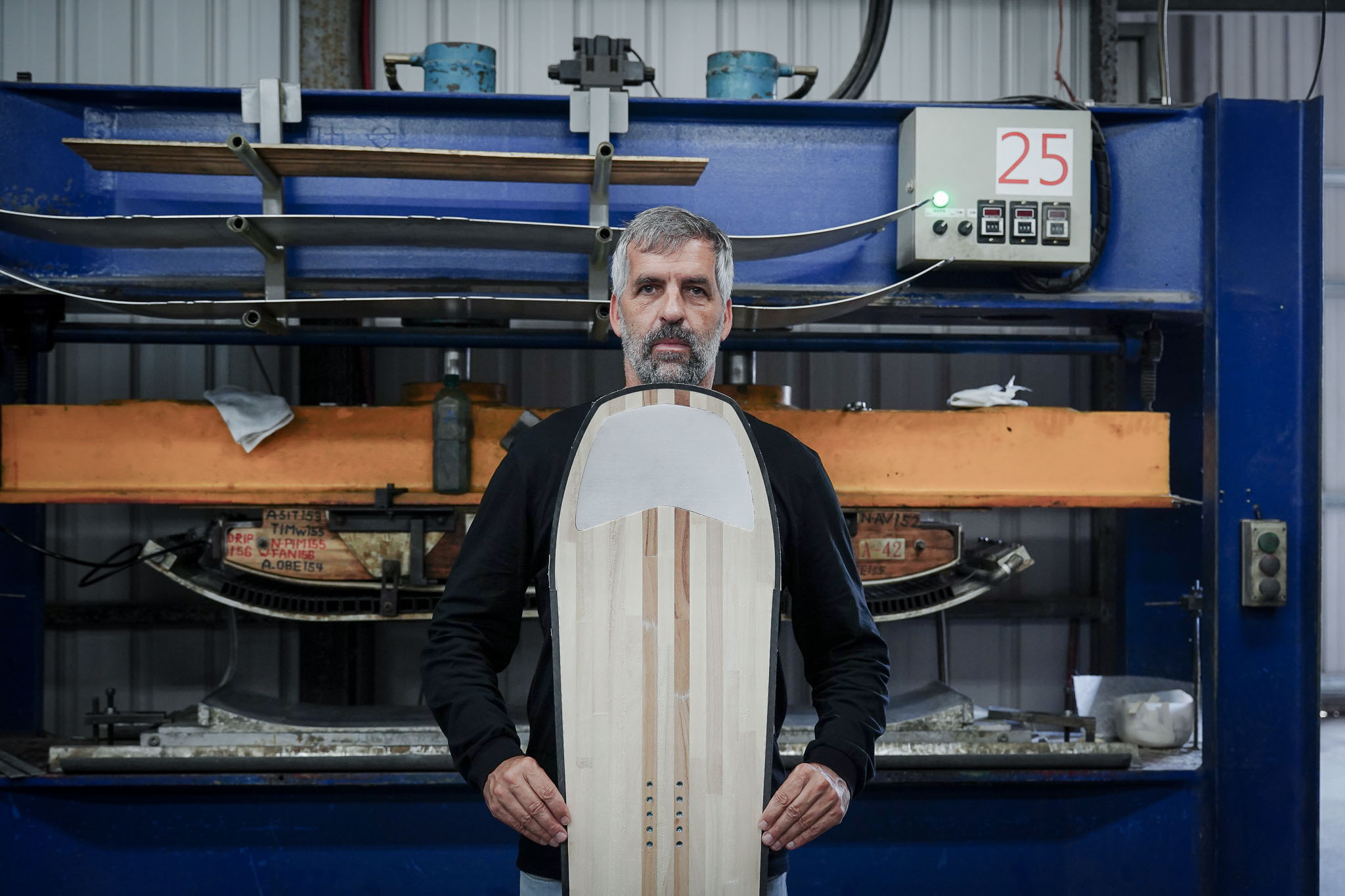
Peter Bauer is not a man who follows fashion. That’s not to say he dresses sloppily or anything. In fact, with his neatly-cropped silver hair and black-rimmed glasses, he looks like he could be running a Brooklyn-based creative agency when he pops onto my screen over a video call. But I’m interviewing him because the company he actually runs, Amplid Snowboards, is celebrating its 21st birthday this year, a major milestone in a notoriously fickle industry. And as our conversation progresses, it becomes clear that the key to this success has been his insistence on ploughing his own furrow, and focusing on substance over style.
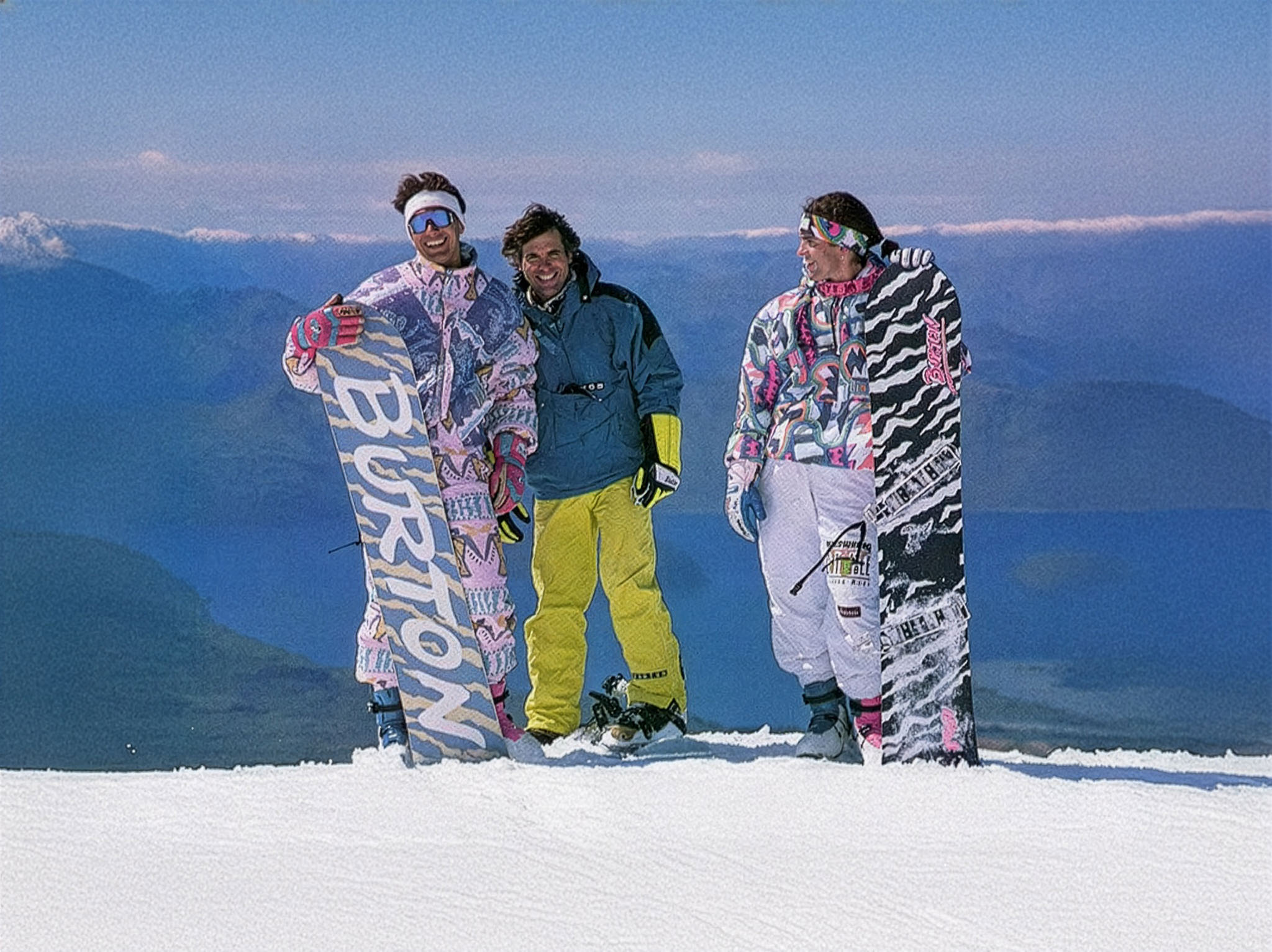
Perhaps this is what happens when you’ve been working in snowboarding long enough to see trends come and go. Before he founded Amplid, back in 2004, Bauer had a 20-year career as a pro-rider. He first stepped on a board back in 1984, got sponsored by Burton in 1986, and went on to win five European Championships, four World Championships, and an incredible 84 World Cup events.
“It’s funny now, because carving is cool again”
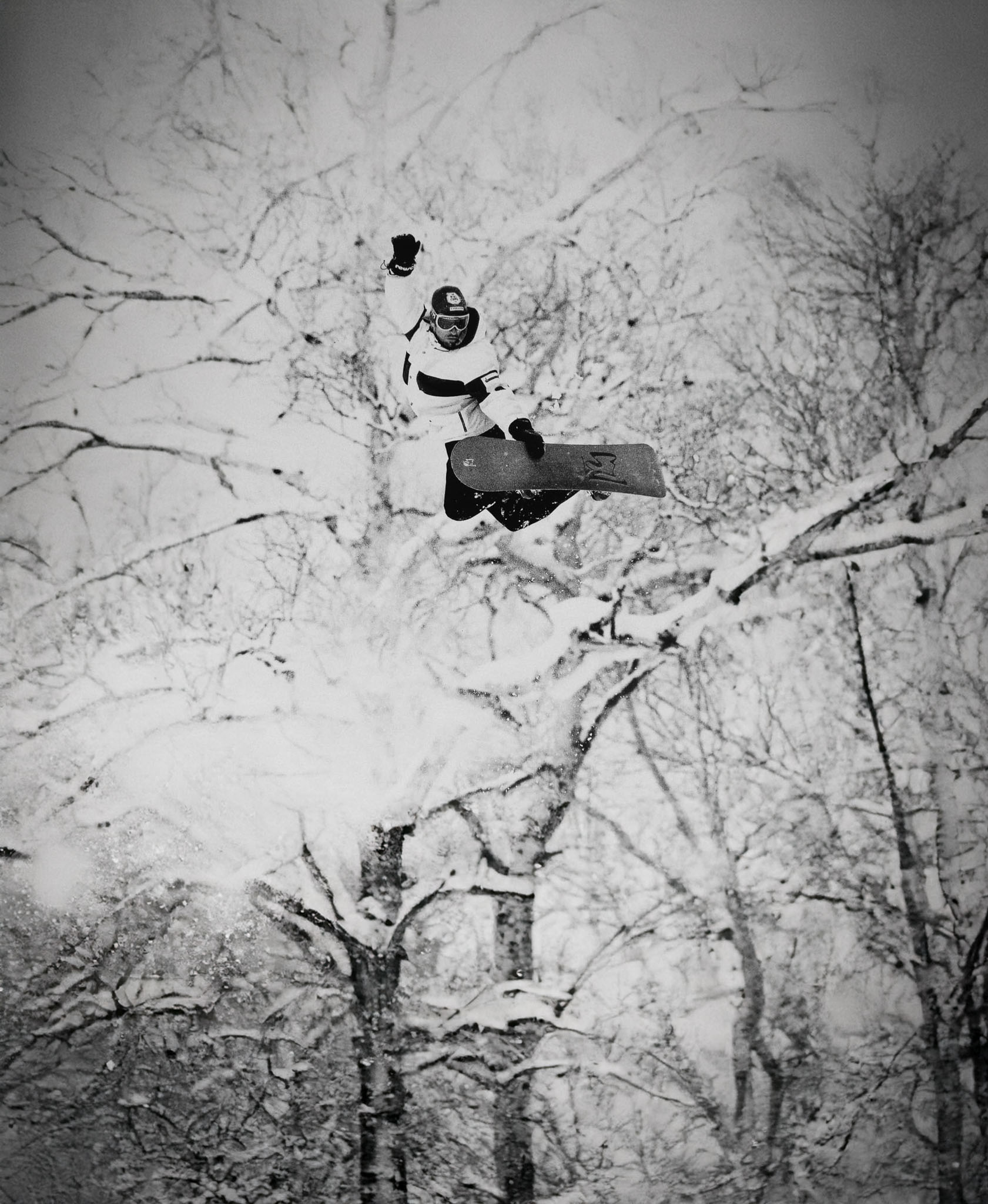
Told you he had a mean method! Photo: Peter-Mathis
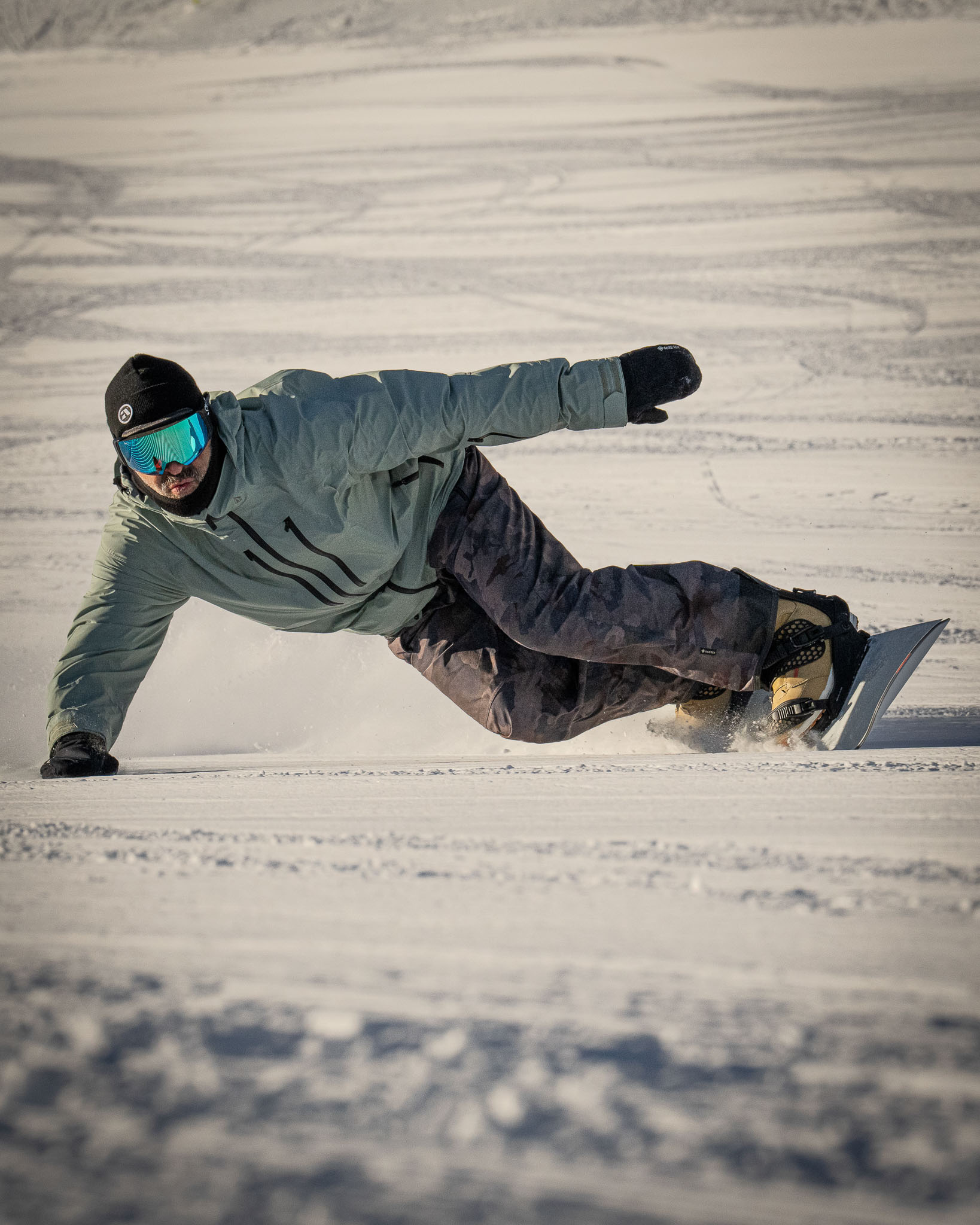
Even as a pro, he resolutely refused to jump on bandwagons. Bauer was a capable freestyle rider with a decent bag of tricks, including a mean method. But although he competed in the halfpipe (slopestyle didn’t exist back then) andbecame vice world champion in the “combined disciplines” behind Craig Kelly, he started to focus on racing after a few seasons, a discipline that became less and less fashionable as the 90s wore on—and on perfecting his carve. “It’s funny now, because carving is cool again,” Bauer says—whereas back in the day, he remembers other snowboarders using homophobic slurs to describe him and his fellow racers. “Even the verb ‘carving’ was banned,” he says, laughing at the ludicrous lengths the sport’s self-appointed gatekeepers went to. “You couldn’t even say ‘I’m just going to carve some turns,’ it was against snowboarding sharia, you would have been stoned right away.” Not that any of this stopped him having a long and successful career, or from developing a close working relationship with Jake Burton. Over the years, Bauer became increasingly involved in his sponsor and mentor’s design process, helping him perfect many of the models that defined Burton’s range in the late 90s. When it came time to hang up his boots, he knew he wanted to start his own snowboard company. But as with his riding career however, he knew that he wanted to do things differently.
Jean, Jake and Peter in Wanaka. Photo: Stefan Fiedler
“The aim was to make a better ride, rather than a louder brand.”
A Material Difference
A quick Snowboard Manufacturing 101: Most snowboards, both then and now, are produced in just a handful of factories around the world. Many of these offer stock materials, shapes and designs, and often, the biggest difference between different companies’ boards are the graphics. The reality is, Bauer says, “Anyone can go to any factory and go, ‘Okay, here are my graphics, I would like to place an order of 100 items per length, for 300 or 400 boards or whatever,’ and then you have your snowboard brand.” Rather than concentrate on the product itself, companies often spend the bulk of their time and money on brand building. “Without mentioning any names, there’s a lot of brands who chose the route of marketing, of buying world champions, paying a lot of riders, and investing into movie production—but actually, they have a mediocre product,” Bauer explains. “Whereas with Amplid, we chose to invest our main revenue into R&D, into moulds, and into experimenting with new materials”. From the start, he says the aim was “to make a better ride, rather than a louder brand.”
Looking at Amplid’s current line-up of boards, no-one would ever accuse them of being loud. Even at their most colourful, their graphics only feature a few muted pastels. Beneath the understated topsheets, however, there’s a whole lot going on. Take the Centrifugal Collection, for example: three models, the Souly Grail, the Time Machine and the UNW8, designed for high-speed carving both on piste and in powder. “We wanted to make really responsive boards that are a bit easier longitudinally,” Bauer says. Your classic hard-charging board “is super responsive, and stiff, but then after two runs it’s so fatiguing—not just on your thighs but also on your nerves because you’re always trying to, like, not kill this Dutch skier in front of you,” he laughs.”
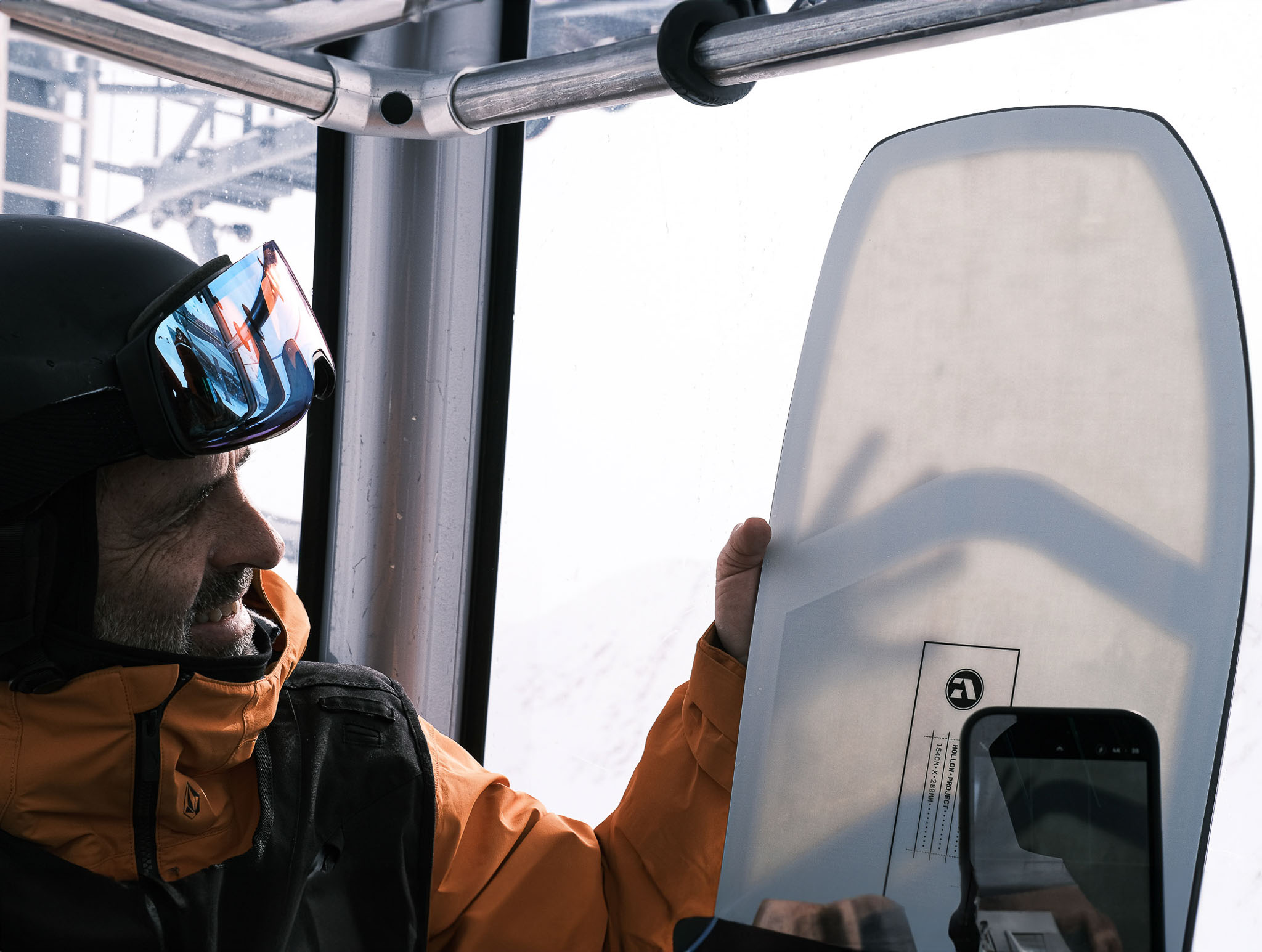
Thinking outside the box, he experimented with arranging carbon stringers, which traditionally run nose to tail on a snowboard, at a 90 degree angle from edge to edge. “I really like carbon, but I don’t like carbon in the longitudinal axis,” he explains. “This way, when you’re on an edge you feel it. We can benefit a little bit from the torsional rigidity of carbon, but on the longitudinal flexibility you have this easy, glass fibre flex, which you want.” Bauer’s desire to experiment with materials has taken him to some stranger places too. “There are these really nerdy forums on the internet where people discuss the properties of composite. Then there are composite trade shows you can go to,” he says. “Ninety-nine percent of what you see is useless, but then you see something and you think ‘huh, this could work in a snowboard.’” It was a chance find like this that led to one of Amplid’s most radical design innovations to date: “The Hollow Project,” a board with no wood core whatsoever. “We found this honeycomb material made in Germany,” Bauer says, “and we wanted to see how light we could go with a board. The weight was insane, on the chairlift it felt like you’d dropped your board,” he says. They looked cool too. Bauer holds up his phone torch and shows me how you can see the light through the snowboard. But the flex didn’t feel great at all, so completely hollow boards never made it past the prototype stage. “R&D is always two steps forward, one step back,” Bauer says. And the trial and error process led to Amplid using the honeycomb material at the nose and tail of lots of their current range. “That’s where it really makes sense, at the tip and tail,” Bauer says. Freestyle boards featuring this “hollow tech” have massively reduced swing weight, which is great for spinning, he says. And hollow tech also features in their best-selling Milligram splitboard—one of the lightest ever produced.
The “Hollow Tech” in the nose of a prototype. Photo: mediaproductionbk
“These days there’s no such thing as a truly bad board … but there are a lot of boring boards.”
Building Boards with Character
Some of this might sound like tinkering for tinkering’s sake, but there’s always a purpose. As board manufacturing has become more standardized over the years, standards have risen. These days there’s no such thing as a truly bad board, Bauer says, but there are a lot of boring boards. And from day one, Amplid’s mission, as he sees it, has been “to build boards with character.” This even applies to their all-mountain boards. Although many brands don’t like to admit it, any board that’s a jack of all trades must, logically, make compromises. “There are always certain sacrifices,” Bauer explains, “like do you want to compromise on performance in powder, or maybe in the park?” This can result in really boring boards that don’t do anything particularly well. But by accepting the need to compromise, and by “allocating and defining exactly where these compromises are,” Amplid have managed to produce The Singular, an all mountain model that still feels distinctive and fun. “In my opinion, and of course this is completely absent of objectivity, it’s the all mountain board with the least sacrifices,” Bauer says.
If The Singular feels singularly different, their more obviously distinctive models are even more characterful. Take the Kodama, a splitboard built specifically for Japow-style tree lines (it’s name means “tree spirit” in Japanese) which has a stubby swallow tail, a massive spoonlike nose, and only comes in a comparatively short 156cm. Or The Snomelier, made for connoisseurs of high-alpine backcountry lines. The Mood Bender, designed as “the ideal backcountry and sidehit freestyle board,” which blends a twin flex with a tapered shape is another example. Of course, Amplid aren’t alone in experimenting with strange shapes. Over the past 15 years, there’s been an explosion in the number of weird and wonderful-looking snowboards on the market. The trend was taken to its logical extreme by the Helgason brothers, who in typically pisstaking style, released a board called the Lobster Nosejob in 2013 which encouraged owners to carve their own shapes out of each end. But Amplid’s shape and design choices are more than cosmetic—they really make a difference to how each board feels and rides.
Photo:mediaproductionbk
Precision Tech & Terminology
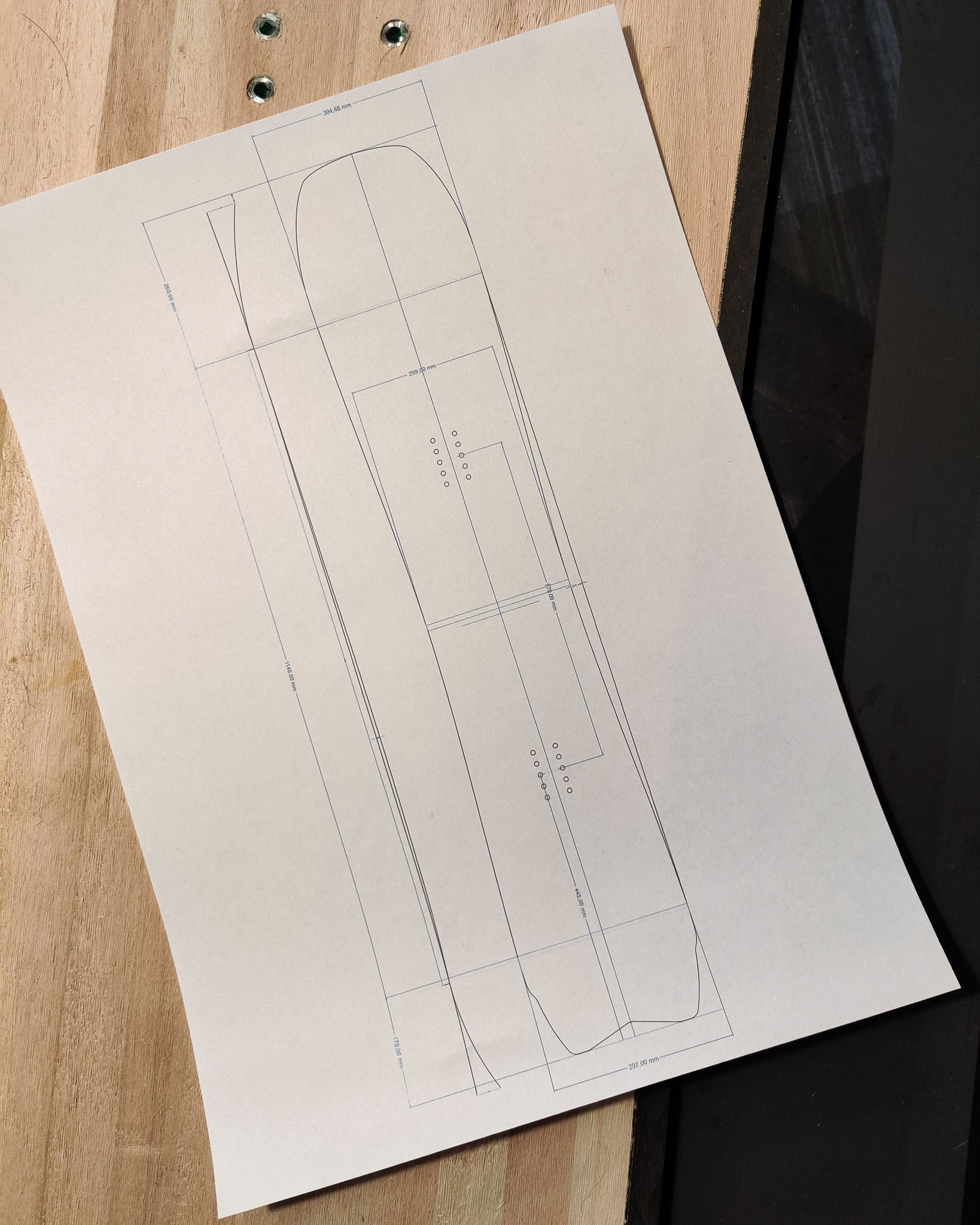
Bauer says he finds a lot of the chat around shape a bit woolly. “People talk a lot about shaping boards, like they’re surf boards. But it’s a completely different process. Shaping a surfboard is a highly respected craft—it’s a mix of feel and spirit and knowing the surfer you’re shaping for. It’s hands on, you get your hands dirty. Whereas you don’t shape a snowboard. You can lay it up by hand, sure, but it goes in a press.” However romantic it might sound, Bauer says he could never honestly describe himself as a shaper. “I’m a designer and a manufacturer.” “There are other terminologies that really piss me off too because they’re physically wrong,” he says. It’s now common to talk of short fat snowboards—like Amplid’s Kodama split, for example—as “volume shift” boards, another term lifted from surfing. “But that’s obviously so wrong,” Bauer says. “Volume doesn’t matter in a snowboard—even if you make it five times thicker, you’re not going to float better in powder. It’s all about surface area. So what we should be calling them is ‘surface-shifted’ boards.”
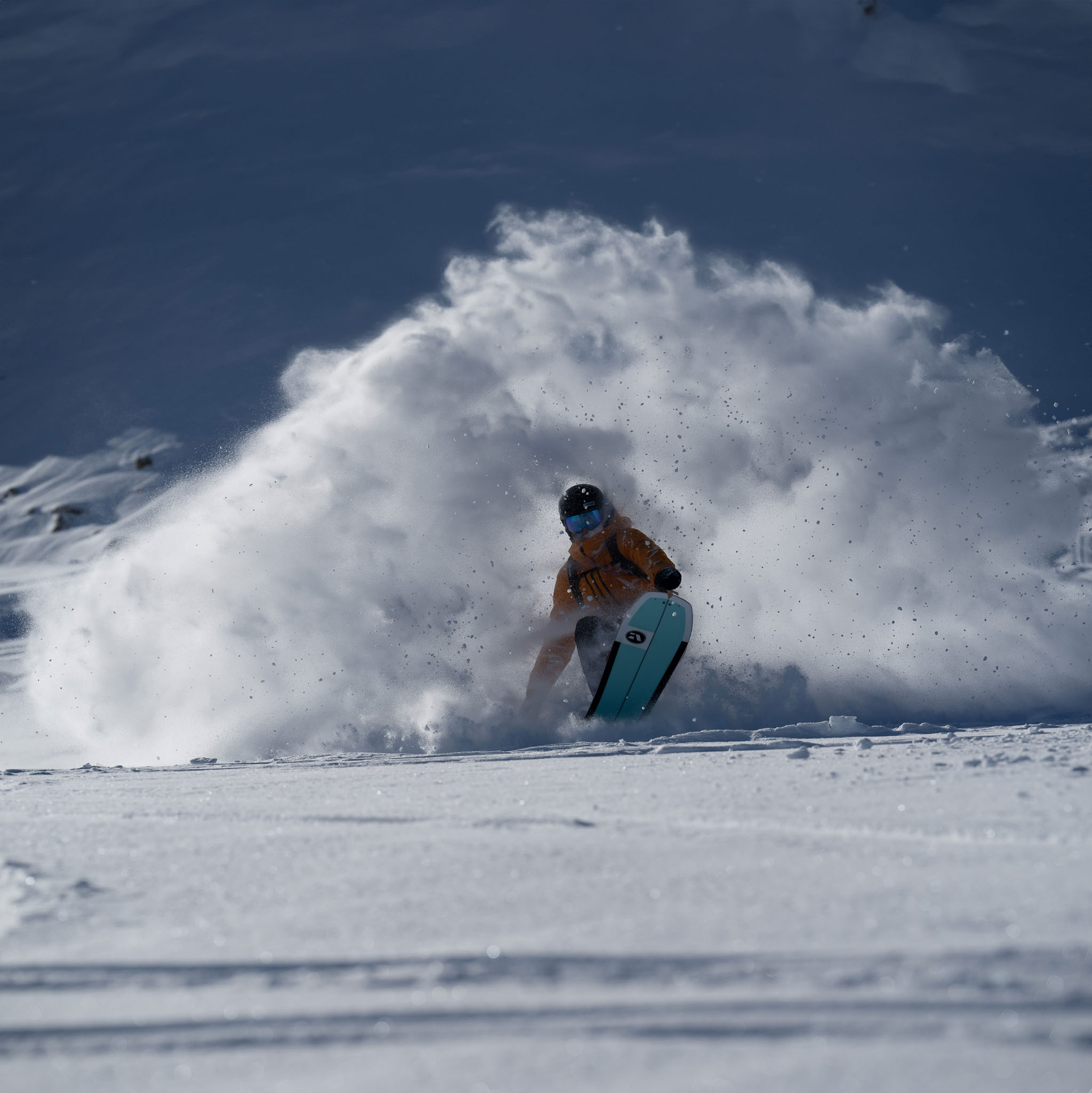
Peter is the cloud master. Photo: mediaproductionbk
Of course Bauer’s been around long enough to know that marketing often wins out. If surf terms like “volume shift” help shift large volumes of boards, brands will keep using them regardless. “This is maybe also a reason why we’re not huge,” he says. Amplid will never be a mass-market brand, he says, “because we go our own way.” But Bauer is proud that they’ve grown continuously throughout the past 20 years, and their boards inspire fierce loyalty in their fans. And it’s clear that for Bauer, precision matters, in terms of terminology as well as tech. At one stage in our chat I ask whether Amplid’s HQ is on the German or the Austrian side of the border. “Neither, we’re on the Bavarian side,” he says laughing. The comment is meant as a joke, but it’s a revealing one, suggesting not just pride in his fiercely-independent home region, but also his precise engineer’s mindset. Bavaria is, of course, globally renowned for its precision engineering. BMW, Mercedes, and Audi, all hail from the area. It would be tempting to suggest that Amplid, whose sleek, high-end boards ooze a Vorsprung durch Technik vibe, share some DNA with these automotive giants. But the truth is probably simpler. They’re the result of years of hard graft and focused R&D work, led by a single-minded individual who’s never been swayed by trends. “And this,” Bauer says, “is why our boards look different, and feel different, and ride different.”
This winter we reviewed the Amplid Soulmate and awarded it one of the best All-Mountain Snowboards on the market. Check our full review below:
From his Pacific Northwest roots to charging big lines in Jackson Hole, Cooper Branham shares how skateboarding shaped his snowboarding style, his time in Wyoming,...
We use cookies on our website to give you the most relevant experience by remembering your preferences and repeat visits. By clicking “Accept All”, you consent to the use of ALL the cookies. However, you may visit "Cookie Settings" to provide a controlled consent.
This website uses cookies to improve your experience while you navigate through the website. Out of these, the cookies that are categorized as necessary are stored on your browser as they are essential for the working of basic functionalities of the website. We also use third-party cookies that help us analyze and understand how you use this website. These cookies will be stored in your browser only with your consent. You also have the option to opt-out of these cookies. But opting out of some of these cookies may affect your browsing experience.
Necessary cookies are absolutely essential for the website to function properly. These cookies ensure basic functionalities and security features of the website, anonymously.
Cookie
Duration
Description
cookielawinfo-checkbox-analytics
11 months
This cookie is set by GDPR Cookie Consent plugin. The cookie is used to store the user consent for the cookies in the category "Analytics".
cookielawinfo-checkbox-functional
11 months
The cookie is set by GDPR cookie consent to record the user consent for the cookies in the category "Functional".
cookielawinfo-checkbox-necessary
11 months
This cookie is set by GDPR Cookie Consent plugin. The cookies is used to store the user consent for the cookies in the category "Necessary".
cookielawinfo-checkbox-others
11 months
This cookie is set by GDPR Cookie Consent plugin. The cookie is used to store the user consent for the cookies in the category "Other.
cookielawinfo-checkbox-performance
11 months
This cookie is set by GDPR Cookie Consent plugin. The cookie is used to store the user consent for the cookies in the category "Performance".
viewed_cookie_policy
11 months
The cookie is set by the GDPR Cookie Consent plugin and is used to store whether or not user has consented to the use of cookies. It does not store any personal data.
Functional cookies help to perform certain functionalities like sharing the content of the website on social media platforms, collect feedbacks, and other third-party features.
Performance cookies are used to understand and analyze the key performance indexes of the website which helps in delivering a better user experience for the visitors.
Analytical cookies are used to understand how visitors interact with the website. These cookies help provide information on metrics the number of visitors, bounce rate, traffic source, etc.
Advertisement cookies are used to provide visitors with relevant ads and marketing campaigns. These cookies track visitors across websites and collect information to provide customized ads.